Most people come to Wayanad for the green: tea slopes, coffee under shade trees, mist sitting low in the valleys by seven in the morning. All of that is real. But if you care about the past, this district in the north-east corner of Kerala has more history packed into it than its size suggests. You can stand in front of carvings made by people whose names nobody will ever know, then walk through a temple that an army once used as a gun store, then visit the grave of a king who fought the East India Company from the forest.
This guide strings those places into two days. I have kept it to what you can see without rushing. If you would rather watch first, the short video below covers the same trail.
Day one: rock, stone and a sultan’s battery
Edakkal Caves: get there early
Start at Edakkal, on a hill called Ambukutty Mala near Ambalavayal. Give yourself the morning. From the car park it is a steep walk up a paved road to the ticket counter, then 300 to 400 steps and iron ladders to the top chamber. It is not technical, but it is a real climb, and in the midday sun it is hard work. Carry water and wear shoes with grip.
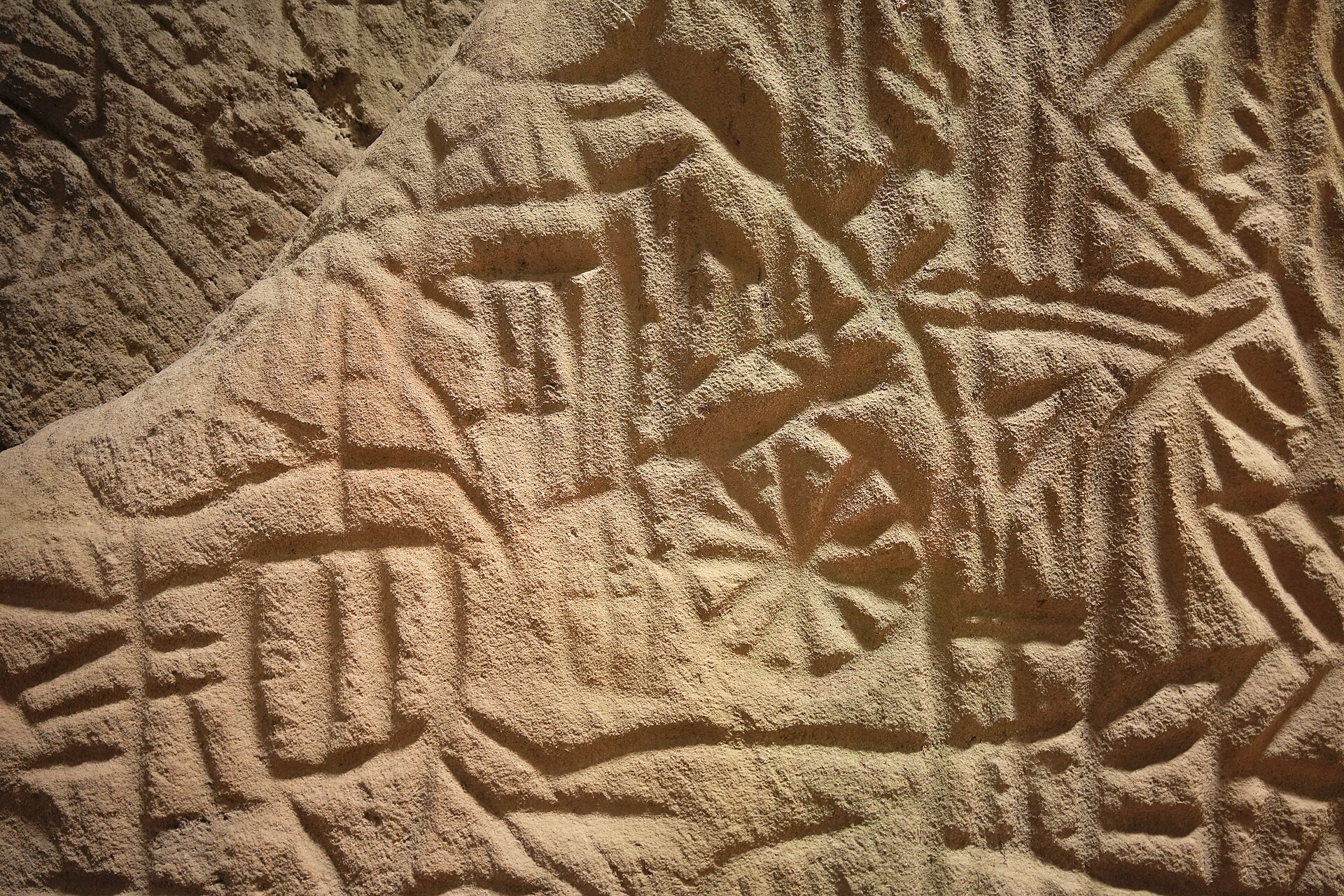
Here is the first surprise: Edakkal is not really a cave. It is a cleft between huge boulders, with one massive rock jammed across the top like a lid. That is where the name comes from. Edakkal means "the stone in between".

Photo: Ingo Mehling via Wikimedia Commons, CC BY-SA 4.0
Light falls in from the gap above, and the walls are covered in carvings: human figures, animals, wheels, patterns that look almost like writing. A British police officer, Fred Fawcett, brought them to wider attention in the 1890s. Since then, scholars have argued about almost everything. Some date the oldest carvings to the Neolithic, thousands of years before the common era. Others push them much later. There are also inscriptions from the early centuries CE, and a figure some researchers compare to motifs from the Indus Valley. Nobody has settled it. I like it better that way. You are looking at a question, not a label.

Photo: Ingo Mehling via Wikimedia Commons, CC BY-SA 4.0
A practical note: daily visitor numbers are capped to protect the carvings, and the site is usually shut on Mondays. On weekends and holidays the queue can be long, so a weekday morning is the sweet spot.
Wayanad Heritage Museum, Ambalavayal
Come down, have lunch in Ambalavayal, and walk into the Wayanad Heritage Museum. It is small and a little old-fashioned, but it does something useful: it fills in the people who lived here before the plantations. You will find tools, weapons, household objects and stone sculptures, much of it connected to the tribal communities of the district, such as the Kurichya, Paniya and Kuruma. Half an hour is enough. It makes what you saw at Edakkal feel less like a puzzle on a wall and more like the start of a long story.
Sulthan Bathery: two layers in one place
End the day in Sulthan Bathery, about 12 km away. The town’s name hides its history. The area was once known as Ganapathivattam, and it had a stone Jain temple, generally dated to around the 13th century and built in a Vijayanagara style. In the late 1700s, the armies of Tipu Sultan, ruler of Mysore, are said to have used the temple to store ammunition. The British wrote it down as "Sultan’s Battery", and that became Sulthan Bathery.

Photo: Vinayaraj via Wikimedia Commons, CC BY-SA 4.0
Historians still disagree on whether the temple was already abandoned when Tipu’s men arrived, and the name has become a political argument in recent years. Standing there, though, what strikes you is the stone itself: thick granite pillars, carved panels and a quiet compound in the middle of a busy town. Late afternoon light is kind to it.
Day two: the Pazhassi trail
Panamaram and the night of 11 October 1802
The second day belongs to Pazhassi Raja, a prince of the Kottayam royal family in north Malabar who refused to accept East India Company rule. For years he fought a guerrilla war from the forests of Wayanad, and his strongest allies were the Kurichya, a tribal community of skilled archers.
Drive to Panamaram, north of Bathery. On the night of 11 October 1802, a small force of Kurichya archers, usually counted at between 150 and 175, attacked the British fort here. They were led by Thalakkal Chandu and Edachena Kunkan. The fort’s commanders, Captain Dickenson and Lieutenant Maxwell, were killed along with dozens of soldiers, and the attackers carried off muskets and ammunition. It was an embarrassment the Company did not forget. Chandu was captured three years later and executed here in 1805.
There is little left of the fort, but a memorial and a small museum to Thalakkal Chandu stand near the Kabini river. Go for the story, not for the ruins.
The Pazhassi tomb and museum, Mananthavady
From Panamaram it is a short drive to Mananthavady, where Pazhassi Raja’s tomb sits on a quiet rise above the river. He was killed in a skirmish with Company troops in November 1805, and the British, who had hunted him for a decade, are said to have treated his body with unusual respect. The tomb and the small museum beside it hold weapons, coins and documents from those years.

Photo: Prof tpms via Wikimedia Commons, CC BY-SA 4.0
If you have seen the Malayalam film about him, you already know the outline. Here you get the quieter version: a riverside, some old swords in glass cases, and the sense that this was a real person in a real place.
Lakkidi and the chain tree
Leave Wayanad the way most people arrive, down the Thamarassery ghat road towards Kozhikode. At Lakkidi, near the top of the pass, look for a large fig tree beside the road with a heavy iron chain hanging from it.

Photo: Vinayaraj via Wikimedia Commons, CC BY-SA 4.0
The story goes that a Paniya man named Karinthandan showed a British engineer the route up the hills, and the engineer killed him so he could take the credit for himself. Travellers began to have accidents on the new road, so a priest bound the restless spirit to this tree with a chain. True or not, the story says something honest about who built the roads and who got remembered. A statue of Karinthandan now stands beside the tree.
Your two-day order
- Day one: Edakkal Caves in the early morning, lunch at Ambalavayal, the Heritage Museum, then the Jain temple at Sulthan Bathery in the late afternoon.
- Day two: Panamaram and the Thalakkal Chandu memorial, the Pazhassi tomb and museum at Mananthavady, then Lakkidi and the chain tree on your way down the ghat.
Base yourself around Sulthan Bathery or Kalpetta on the first night. You will need a car or a hired driver for this route; buses run between the towns, but timings make two days tight. Our guide to getting around Kerala has more on that.
When to go
October to February is the best time. The monsoon has passed, the hills are still green, and the Edakkal climb is pleasant rather than punishing. During the June to September rains, paths are slippery and Edakkal may close on very wet days. For month-by-month detail, see when to visit Kerala.
If history is your way into Wayanad, coffee is a good second one. Read how a fungus turned Wayanad into Robusta country, or if you are still deciding which hills to visit, try Munnar vs Wayanad.