Wayanad sits in the north-east corner of Kerala, up in the Western Ghats where the state meets Karnataka and Tamil Nadu. Most visitors arrive expecting tea gardens and waterfalls, and they get those. What they do not expect is a district with no railway line, prehistoric carvings, a lake with its own fish and a tree with a chain hanging from it.
Here are ten things worth knowing before you go, plus a couple of bonus stops. The video covers the same list if you would rather watch.
1. The name means "land of paddy fields"
Wayanad is usually traced to Vayal Nadu, meaning the land of paddy fields. Rice still grows in the low valleys between the hills, even though coffee, tea, pepper and areca have taken over most of the slopes. Look down from any viewpoint and you will see the old flat green floors of the valleys.
2. There is no railway line
Wayanad is one of the few districts in Kerala with no railway at all. You arrive by road. The nearest big stations are Kozhikode on the coast and Mysuru on the Karnataka side. For flights, Kozhikode (Calicut) International Airport is the usual choice, with Kannur as a backup. From the coast, the drive up the Thamarassery ghat road, with its nine hairpin bends, is part of the experience. Our guide to getting around Kerala covers buses and taxis.
3. Close to a fifth of the people are Adivasi
Wayanad has the highest share of tribal people of any district in Kerala, close to a fifth of the population according to the census. The largest community is the Paniya. Others include the Kurichya, famous as archers, the Kuruma, the Kattunayakan and the Adiya. Their history runs through everything else on this list, from the chain tree to the war against the British. If a local guide or homestay offers a respectful introduction to a community or its crafts, take it. Skip anything that treats people as a show.
4. Edakkal Caves hold some of India’s oldest carvings
On a hill called Ambukutty Mala near Ambalavayal, a cleft between giant boulders holds walls of carved figures, animals and symbols. They are often dated to the Neolithic, around 6000 BCE, though scholars still argue about how old the oldest really are. One figure, a man holding a jar-like cup, has been compared to motifs from the Indus Valley Civilisation.

Photo: Ingo Mehling via Wikimedia Commons, CC BY-SA 4.0
Expect a steep climb of a few hundred steps. Go early, avoid weekends if you can, and check opening days, as it usually closes on Mondays. Our two-day Wayanad history trail has more detail.
5. A tree holds a ghost in chains
At Lakkidi, near the top of the ghat road, a large fig tree has an iron chain hanging from its branches. Local legend says a Paniya man named Karinthandan guided a British engineer up the pass, and the engineer killed him to keep the credit. When accidents began on the new road, a priest chained Karinthandan’s spirit to the tree. A statue of him now stands beside it. It is a two-minute roadside stop with a story you will keep thinking about.
6. Pookode Lake has a fish found nowhere else
A few kilometres from Lakkidi, near Vythiri, Pookode Lake is the smallest and highest natural freshwater lake in Kerala, sitting at about 770 metres. From above it is said to be shaped a little like the map of India. It is also home to a small barb, Pethia pookodensis, that is known only from this lake.

Photo: Rameshng via Wikimedia Commons, CC BY-SA 3.0
You can take a pedal boat out or walk the path around the edge. Early morning, before the crowds and the music, is when it is at its best.
7. Kuruva Island is not one island
Kuruvadweep, or Kuruva Island, is a group of small forested islets in the Kabini river, spread over about 950 acres. You cross on bamboo rafts or fibre boats, then walk through quiet forest trails. Entry is controlled by the forest department, numbers are limited each day, and the island is closed during the monsoon. Arrive early and check whether it is open before you drive out.

Photo: Challiyan via Wikimedia Commons, CC0
8. It is coffee country, mostly Robusta
Wayanad grows most of Kerala’s coffee, and almost all of it is Robusta, which has a Geographical Indication tag as "Wayanad Robusta". The reason is a fungus that wiped out the old Arabica estates in the late 1800s. We tell that story in how a fungus turned Wayanad into Robusta country. If you visit around March, you might catch the white coffee blossom.
9. Sulthan Bathery is named after an ammunition store
The town’s original name was Ganapathivattam. In the late 18th century, Tipu Sultan’s Mysore army is said to have used an old Jain temple here to store its ammunition. The British called it "Sultan’s Battery", and the name stuck. The stone temple still stands in town and is well worth a visit.
10. Wayanad fought the East India Company
Pazhassi Raja, a prince of north Malabar, led a long guerrilla war against the East India Company from these forests. His Kurichya archers, led by Thalakkal Chandu, captured the British fort at Panamaram on the night of 11 October 1802. Pazhassi was killed in 1805, and his tomb is at Mananthavady. It is one of the earliest chapters of armed resistance to British rule in India, and Wayanad remembers it.
Bonus: Banasura Sagar and Chembra’s heart-shaped lake
If you have an extra day, head to Banasura Sagar Dam, an earth dam with a large reservoir dotted with small islands, and a good place for a boat ride with the hills behind.

Photo: Athulvis via Wikimedia Commons, CC BY-SA 4.0
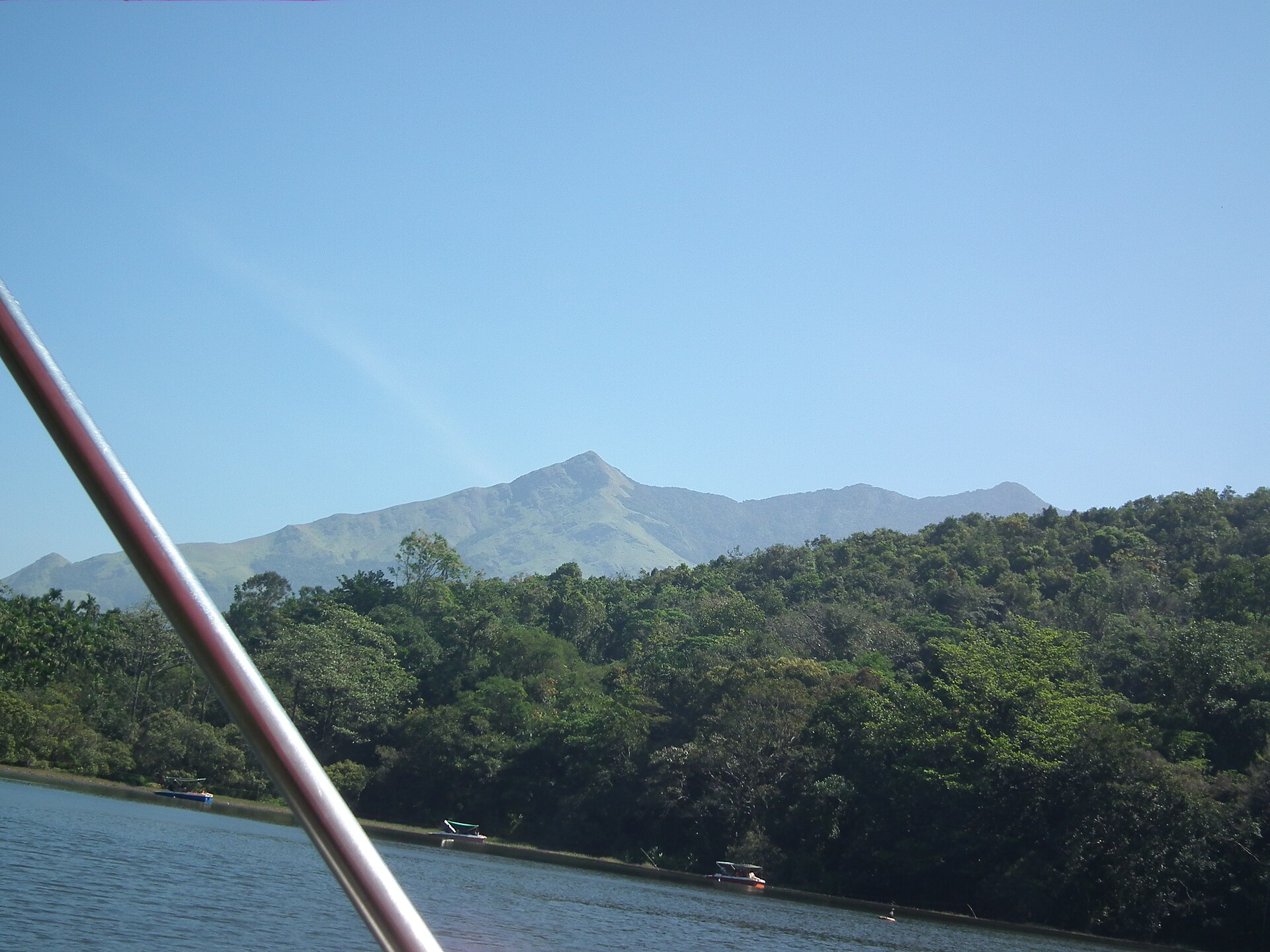
Fitter travellers can trek up Chembra Peak, Wayanad’s highest point, to a small lake shaped like a heart. The trek needs a forest department permit and is closed at times, so check before you plan around it.

Photo: Jaseem Hamza via Wikimedia Commons, CC BY 3.0
Before you go
The best months are October to February: cool, green and dry enough for climbing and walking. The June to September monsoon brings heavy rain and the odd landslide on ghat roads, and several sites close. Wayanad is spread out, so base yourself in one area, such as Kalpetta, Vythiri or Sulthan Bathery, and do day trips rather than changing hotels every night. That is the slow way, and it suits this place.
Still deciding between hill stations? Read Munnar vs Wayanad next, or see when to visit Kerala for month-by-month weather.