If you have a few days for Kerala’s hills, sooner or later you hit the same question: Munnar or Wayanad? Both are green, both are cool after the coast, and both get called "the best hill station in Kerala" by someone. But they are quite different places, and they are not close to each other. Pick based on what you actually want, not on which name you heard first.
The video gives you the quick version. The rest of this guide goes through it piece by piece.
Where they are
Munnar is in Idukki district, in the middle of Kerala, up in the high ranges east of Kochi. Wayanad is a whole district in the far north-east, on the borders of Karnataka and Tamil Nadu. By road they are about 250 to 300 km apart, which in hill traffic means most of a day. Doing both in one short trip is possible, but you lose a day in the car.
Which airport to fly into
- For Munnar: fly into Kochi. The drive up is roughly 110 km and usually takes three to four hours, with the last stretch climbing through tea and cardamom country.
- For Wayanad: fly into Kozhikode (Calicut), with Kannur as a backup. From Kozhikode you drive up the Thamarassery ghat road, a winding climb with nine hairpin bends, and reach Wayanad in about three hours depending on traffic.
Wayanad is also a fairly easy drive from Bengaluru and Mysuru, which makes it popular with weekenders from Karnataka.
Munnar: tea and a tall peak
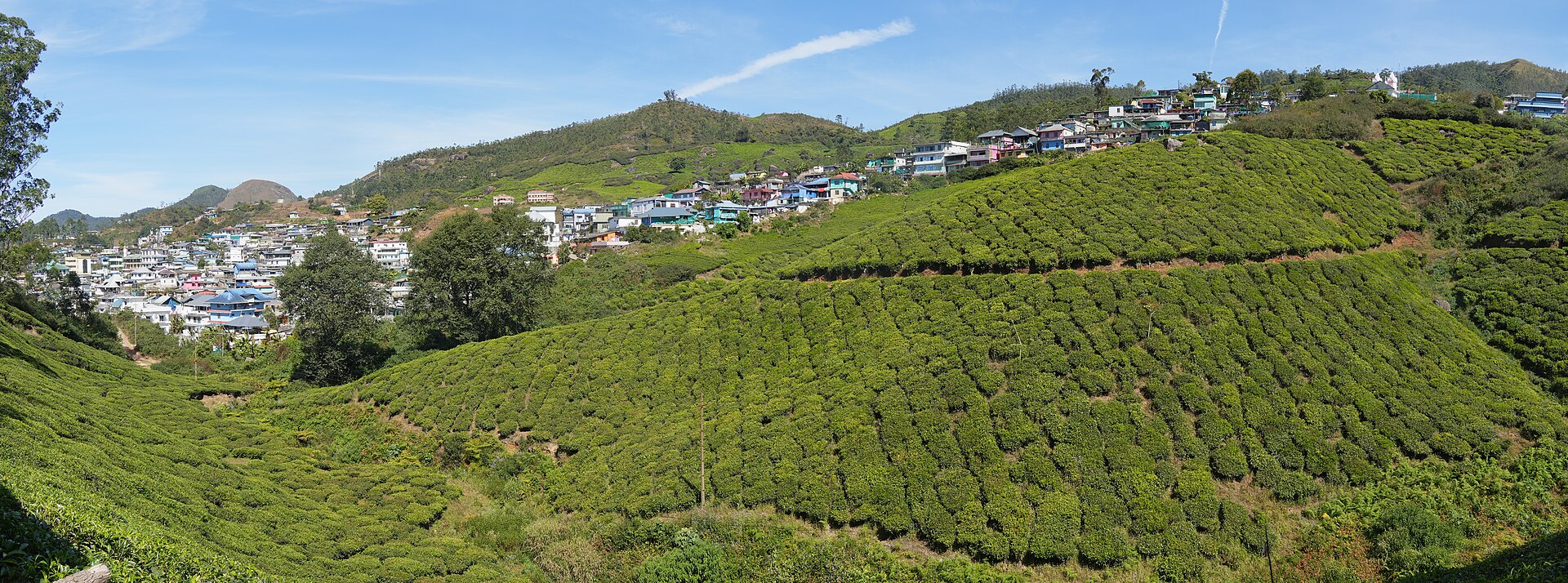
Munnar is what most people picture when they think of Kerala’s hills: rolling tea estates trimmed so neatly they look combed, with workers’ lines and factory roofs tucked into the folds. Tea has been grown here since the late 1800s, and it still shapes everything you see.

Photo: Ingo Mehling via Wikimedia Commons, CC BY-SA 4.0
Munnar is higher and cooler than Wayanad, so pack a layer for the evenings. Just outside town is Eravikulam National Park, home to the Nilgiri tahr, a sure-footed mountain goat found only in the Western Ghats. The park’s Rajamala section is where most visitors see them. The park also contains Anamudi, at about 2,695 metres the highest peak in India south of the Himalayas. It closes every year from 1 February to 31 March for the tahr’s calving season, so plan around that.

Photo: Jatin Sindhu via Wikimedia Commons, CC BY-SA 4.0
Wayanad: forest, caves and a lake
Wayanad feels wilder and more spread out. Instead of one tea-covered town, you get a district of small towns, coffee farms, paddy valleys and real forest. The variety is the draw. In a few days you can climb to the prehistoric carvings at Edakkal Caves, take a boat out on Banasura Sagar reservoir, walk around Pookode Lake and cross by raft to Kuruva Island.

Photo: Athulvis via Wikimedia Commons, CC BY-SA 4.0
The Wayanad Wildlife Sanctuary, at Muthanga and Tholpetty, offers jeep safaris through forest connected to Karnataka’s Bandipur and Nagarhole and Tamil Nadu’s Mudumalai, so elephants, deer and gaur are common sightings. Safari timings and closures change with the season, so check locally. Wayanad also has more history on the ground, from Edakkal to Pazhassi Raja’s war with the East India Company. Our Wayanad history trail covers that in two days.
The neelakurinji: Munnar’s twelve-year flower
Munnar has one trump card that Wayanad cannot match, but it only plays it once every twelve years. The neelakurinji, a shrub that grows on the high grasslands, flowers all at once in a single season and turns whole hillsides blue-violet. The last big bloom around Munnar was in 2018, which puts the next one around 2030. If you happen to be in Kerala in a bloom year, go to Munnar. Otherwise, do not plan a trip around it.

Photo: Vinayaraj via Wikimedia Commons, CC BY-SA 4.0
Avoiding the crowds
Munnar’s popularity is its weak point. On long weekends, at Christmas and New Year, during Onam and through the April and May school holidays, the roads into town jam and the main viewpoints fill up. If you can, go midweek, outside holidays, and stay a little outside town rather than in the centre. Wayanad gets busy on weekends too, especially with visitors from Bengaluru, but because it is spread out it rarely feels as packed.
How to choose
- Pick Munnar if you want the classic tea-estate landscape, cooler weather, mountain views and a chance to see the Nilgiri tahr, and you are flying into Kochi or combining the hills with the backwaters.
- Pick Wayanad if you want forest, wildlife, history and variety, if you enjoy moving between small sights over several days, or if you are coming from Bengaluru, Mysuru or north Kerala.
For a first trip that also takes in Kochi and the backwaters, Munnar usually fits more neatly. For a slower trip, or a second visit to Kerala, Wayanad rewards the extra time.
One last rule
Whichever you choose, give it at least three nights. Both places are about the hours between the sights: mist in the morning, a long lunch, a walk through a plantation with nowhere to be. Rush either one and you will mostly see the inside of a car.
For weather month by month, see when to visit Kerala. If Wayanad wins, start with ten things to know before you go, and for more on Kerala’s hill country, read our guide to the hills.