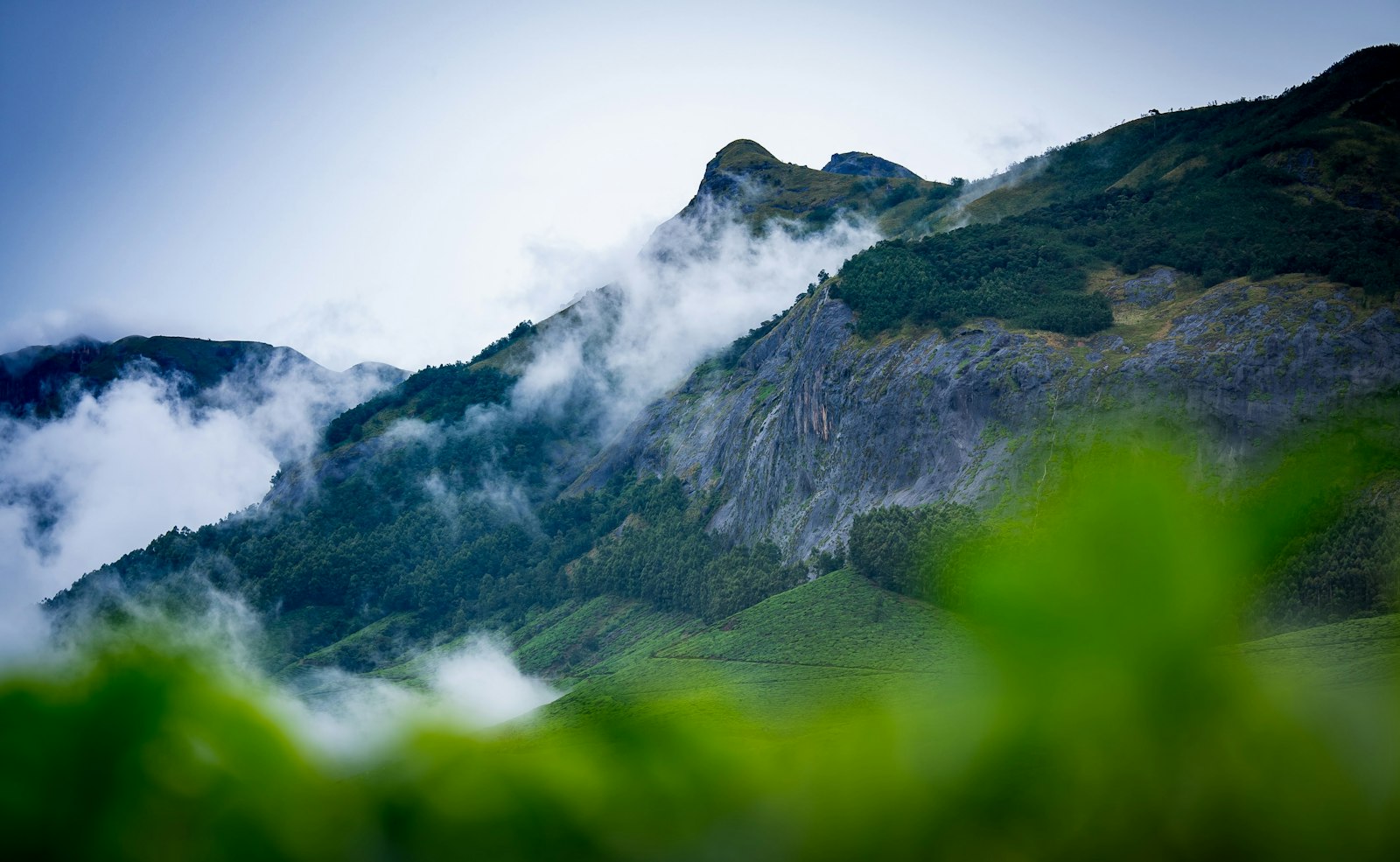
Come up out of the heat and the backwaters and Kerala changes completely. The air cools. The land folds into ridges. Tea gardens roll away in that unreal, clipped green, and the mist comes and goes like a slow breath. This is the Western Ghats, the mountain spine along the state’s eastern edge, and it is where Kerala does its deepest slowing down.
The hills are made for lingering, and yet they are often done fastest of all: a long drive up, a rushed viewpoint, a tea-factory photo, a drive back down. This guide is about staying, and walking, and letting the hills work on you. It is the parent guide for the individual hill place guides to come. If you are planning your route, read it alongside how to plan a slow Kerala trip yourself.
The three main hill bases, compared for pace
Kerala has three well-known hill destinations, and they have quite different personalities. Pick by the kind of slow you want.
Munnar: tea country, cool and green
Munnar is the famous one: high tea country, with mile after mile of manicured tea gardens draped over steep hills, and cool, sometimes cold, air. It is the most set up for visitors, which cuts both ways. The scenery is extraordinary and the town has everything you need; the flip side is that the central sights and the road up can get busy and touristy in season.
The slow move in Munnar is to stay outside the town, up among the estates, in a homestay or small stay with a view, and to walk. Away from the honeypot viewpoints, the tea country is quiet, and a morning on foot between the bushes, with the pickers at work and the mist lifting, is worth ten crowded photo stops.
Wayanad: forest, wildlife, and space
Wayanad, in the north, is greener, wilder, and more spread out. Instead of tea gardens it is forest, spice plantations, paddy, waterfalls, caves, and wildlife sanctuaries, with elephants and more in the protected areas. It feels less like a resort town and more like a whole region to roam.
Wayanad suits travellers who want nature and space over polish, and who like the idea of a base from which to walk, visit a sanctuary, and see fewer other tourists. It is also home to Adivasi (indigenous) communities and deep history, which asks for extra respect and care. [VERIFY: current status and permit rules for Wayanad’s wildlife sanctuaries and any trek permits.]
Thekkady (Periyar): spice and wildlife by the lake
Thekkady, around the Periyar tiger reserve, pairs a wildlife sanctuary with Kerala’s richest spice country. You can take a boat on Periyar lake, walk in the forest buffer with a guide, and wander spice plantations heavy with cardamom, pepper, and clove. It is a good all-rounder: cooler than the lowlands, green, and centred on nature rather than tea.
Thekkady suits those who want the spice-and-wildlife side of the hills, and it sits handily on routes between the backwaters and the high ranges.
| Base | Character | Best for | Note |
|---|---|---|---|
| Munnar | Tea gardens, cool, most developed | Tea country walks, big views | Stay outside town, walk the estates |
| Wayanad | Forest, wildlife, spread out | Nature, space, fewer crowds | Greener and wilder; travel takes time |
| Thekkady | Spice and lake wildlife | Spice farms, Periyar, all-rounder | Good on a backwater-to-hills route |
Tea and spice experiences that are not tourist traps
The hills are full of tea and spice, and also full of thin, rushed versions of both. Here is how to find the real thing.
For tea, walk, do not just tour
The typical tea experience is a quick factory visit and a shop at the end. Fine, but shallow. The real thing is to walk in the gardens early, when the light is low and the pickers are out, and to talk to people. Stay on an estate or with a homestay that has tea knowledge, and ask to be shown around properly. A slow cup of estate-fresh tea on a misty veranda, after a morning walking the slopes, beats any conveyor-belt tour. [VERIFY: whether to name a specific small estate-stay or tea walk you personally recommend near Munnar.]
For spice, choose small and working
Big “spice garden” attractions can be staged. Seek out a small, working plantation, often attached to a homestay, especially around Thekkady and Wayanad, where a family actually grows cardamom, pepper, vanilla, coffee, and more. Walk it with someone who farms it, crush a fresh leaf, smell a green peppercorn, and understand what is in your food. It is cheaper, realer, and far more memorable than a polished tour.
From the field
The best spice walk I ever joined was not booked or advertised. It was my homestay host in the hills, after breakfast, saying “come, let me show you the garden”. An hour later I could tell cardamom from cloves by smell, I had eaten a fresh coffee cherry, and I understood my dinner completely differently. Ask your hosts. The unadvertised walk is almost always the good one.
Walking and staying
The hills are the one part of Kerala truly made for walking, and walking is the slowest, best way to know them.
- Estate and village walks. In tea and spice country, gentle walks between gardens and villages need no permit and reward you endlessly. Your homestay can point you to routes.
- Guided forest walks. In and around the sanctuaries, notably Periyar and Wayanad, you can take guided nature walks or soft treks with official guides, which is the responsible way to enter wildlife areas. Book through the forest department or your stay. [VERIFY: current guided-walk and trek booking process and costs for Periyar and Wayanad.]
- Waterfalls and viewpoints on foot. Where you can reach a viewpoint or fall by walking rather than driving, do; the drive-up crowds thin quickly once there is a path.
For staying, the pattern is the same as everywhere in slow Kerala: choose a homestay or small estate stay over a big resort, and choose one outside the main town if you can. A hill homestay gives you a fire or a blanket, home cooking, local knowledge, and a veranda to watch the mist from. That veranda, honestly, is half the reason to come.
When to go, and how to get there
The hills are cooler year round, which makes them a fine escape from lowland heat in April and May. In the monsoon they are spectacularly green and misty and quiet, though trails get muddy and leechy; bring the right shoes and lean into the atmosphere. The clear October to March window gives the crispest views and coldest nights. See the full picture in when to visit Kerala.
Getting up into the hills is where a KSRTC bus shines, since the railway does not climb here. Buses reach Munnar, Wayanad, and Thekkady from the main towns; they are cheap and characterful, if winding. For the one tricky hill leg, a hired car can be worth it. The full breakdown is in getting around Kerala without a driver.
A slow hills day
To set the pace, here is an unhurried hill day:
- Early. A walk out from your stay before breakfast, into the tea or the spice, while the mist still hangs.
- Morning. Breakfast on the veranda, then a longer walk, or a guided nature walk in a sanctuary.
- Midday. A big home-cooked lunch and a proper rest; the hills invite a nap.
- Afternoon. A slow visit to a small working plantation, or just tea and a book as the clouds roll through.
- Evening. A blanket, a warm dinner, and the deep quiet that the lowlands never quite have.
Balance a few hill days against your time on the backwaters and in the old coastal towns, and you have the whole shape of Kerala: water, sea, and cool green height. The hills will hand you the stillest part of the trip. Give them the time to.
What to pack for the hills
The hills catch people out, because they are so much cooler than the coast that most visitors arrive underdressed. A few things make all the difference:
- A warm layer. Evenings and early mornings in Munnar or Wayanad can be genuinely cold, and many hill stays are not heated. A fleece or light jacket is not optional.
- Proper shoes. For estate and forest walks you want closed shoes with grip, especially in the wet, when paths are slick.
- Rain protection. Even outside the monsoon, hills make their own weather. A light waterproof and a dry bag for a camera or phone earn their place.
- For the monsoon, leech socks or high socks and salt. Leeches are harmless but unpleasant on wet trails; long socks and a little salt or repellent handle them.
Pack light overall, but do not skip the warm layer. The traveller shivering on a Munnar veranda at dusk is always the one who thought “it’s India, it’ll be hot”.
Responsible travel in the hills
The hills are fragile and, in places, home to communities and wildlife that deserve real care. Travel here gently. Stick to marked paths and go with official guides in forest and sanctuary areas, both for your safety and to protect the habitat. Keep a respectful distance from any wildlife and never feed it. In Adivasi (indigenous) areas, especially in Wayanad, be a quiet, respectful guest, ask before photographing people, and support community-run stays and enterprises where you can. And carry your plastic back out with you; the hills have far less waste infrastructure than the towns.
Treading lightly is one of the three pillars of slow travel, and nowhere does it matter more than up here, where a small footprint keeps these ridges worth returning to.